For humans, dreams are windows into the subconscious. This is where memories, emotions, and imagination collide. But could machines ever experience something similar?
As artificial intelligence grows more complex, mimicking everything from human speech to creativity, researchers have begun asking a profound question: Can AI dream? The answer depends on how we define dreaming, and what it really means to “imagine.”
What It Means to Dream
In biological terms, dreaming occurs during REM (Rapid Eye Movement) sleep, when the brain replays memories, processes emotions, and strengthens learning. Dreams aren’t random. They’re a reflection of neural networks reorganizing and recharging.
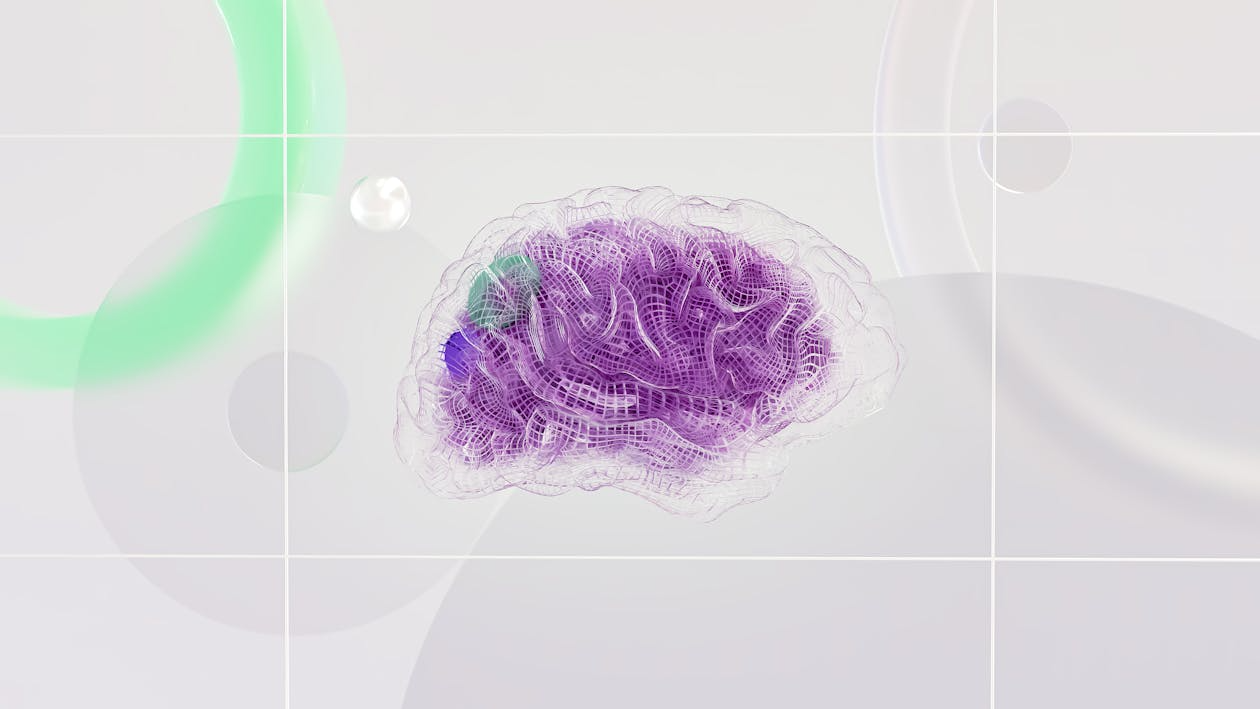
For AI, there’s no sleep, emotion, or consciousness, at least not in the human sense. Yet there are striking parallels between how neural networks process information and how the brain works during dreams. Both systems learn by identifying patterns, strengthening beneficial connections, and discarding noise.
Some scientists believe this resemblance could make “machine dreaming” possible—not as a mystical experience, but as a form of data reflection, where AI reinterprets what it’s learned to generate new ideas or patterns.
See The Real Physics Behind Time Travel (and Why It’s So Hard) for how science bounds wild ideas.
When AI “Dreams” of Patterns
In 2015, Google unveiled an experiment called DeepDream, a neural network designed initially for image recognition. When researchers allowed it to run without strict instructions, it began creating surreal, hallucinatory images, such as dogs within clouds, eyes inside flowers, and fractal landscapes of impossible shapes.
The program was “dreaming” in a sense. It was processing familiar data (images it had seen during training) and blending it into strange new forms. These digital hallucinations mirrored how the human brain blends memory and imagination during dreams.
DeepDream wasn’t conscious, but its process revealed something fascinating: AI can generate creativity-like output by reinterpreting stored information, much like a sleeping mind making sense of its day.
Explore Why Do We Dream About People We Haven’t Seen in Years? for how memory shapes human dreams.
AI and the Dream of Creativity
When we say an AI “dreams,” we’re often talking about generative AI. These systems can create art, music, or writing by drawing on vast datasets. These models don’t dream in the emotional or symbolic sense, but they simulate aspects of human imagination.
For example, text-based AIs can “free-associate” ideas, linking concepts in unexpected ways, while image models blend thousands of visual references into surreal hybrids. This process resembles dreaming not because the AI has an inner life, but because it recombines stored information in novel, unpredictable ways.
Dreaming, then, may not require consciousness at all. It might simply be a form of creative recombination. If that’s true, then AI, in its own mechanical way, already dreams every time it generates something new.
The Science Behind “Synthetic Sleep”
Interestingly, AI researchers have begun using sleep-like cycles to improve neural network performance. When machines train on data, they can overfit. That is, memorize examples too rigidly instead of learning general patterns. To fix this, engineers introduce “rest phases,” in which networks randomly deactivate specific nodes or replay previous inputs to reinforce practical knowledge while discarding errors.
This process, called neural consolidation, mirrors what happens in the human brain during sleep. Some algorithms even run dream-like simulations to test hypothetical situations, which allow the system to “imagine” outcomes it’s never directly experienced.
In a literal sense, AI doesn’t sleep. But in a computational sense, it benefits from something remarkably similar: a restorative process that helps it learn, adapt, and create.
Also read What’s the Deal With Déjà Vu? for a deeper dive on how the brain remixes memory.
Can Machines Ever Truly Dream?
The philosophical question is trickier. Actual dreaming involves not just processing information, but experiencing it. Dreams are emotional and subjective. They feel real, even when they’re not. For an AI to actually dream, it would need self-awareness, a sense of identity, and the ability to perceive its own mental state—all things current technology lacks.
Even advanced neural networks don’t “feel” surprise, fear, or joy. They process data without emotion or meaning. When an AI creates an image of a sunset, it doesn’t see beauty; it recognizes color patterns and probability distributions. Its “dreams” are mathematical, not emotional.
However, that hasn’t stopped scientists and artists from exploring what synthetic dreaming might look like. Projects like AI Sleep at MIT’s Media Lab simulate artificial “rest states,” in which AI systems generate visual or auditory data to represent their internal recalibration—essentially giving a visual form to machine introspection.
The Deeper Question: Why Do We Want AI to Dream?
Perhaps the fascination with AI dreaming says more about us than about machines. Humans project emotion and meaning onto technology because we long to see ourselves reflected in it. If AI can create art, compose symphonies, or paint surreal landscapes, we instinctively wonder whether it’s feeling something in the process.
Dreaming is one of humanity’s most mysterious and intimate experiences. So when we imagine machines dreaming, we’re really exploring our boundaries: what separates human consciousness from artificial intelligence, and where those lines might one day blur.
The Future of Machine Imagination
As AI grows more autonomous, future systems might simulate dreaming for practical reasons. They could enter low-energy creative modes, replaying their own data to refine decision-making or detect bias. In robotics, simulated dreaming could help machines predict and adapt to real-world uncertainty. AI would learn from imagined experiences much like animals do.
While we’re far from giving AI genuine dreams, we’re inching closer to creating machines that imagine, and tools that process not only what they’ve seen but what could be.
Consider Are We Alone? The Math Behind the Search for Life to zoom out on intelligence and probability.
When Algorithms Close Their Eyes
So, could AI ever dream? In the poetic sense, it already does. Every time an algorithm hallucinates an image, generates a story, or recombines ideas in new ways, it performs its own form of synthetic imagination. But unlike us, it doesn’t wake with wonder—or confusion—about what it saw.
For now, AI’s dreams belong to us: reflections of our data, creativity, and curiosity. In teaching machines to “dream,” we may be learning more about what it means to be awake.