
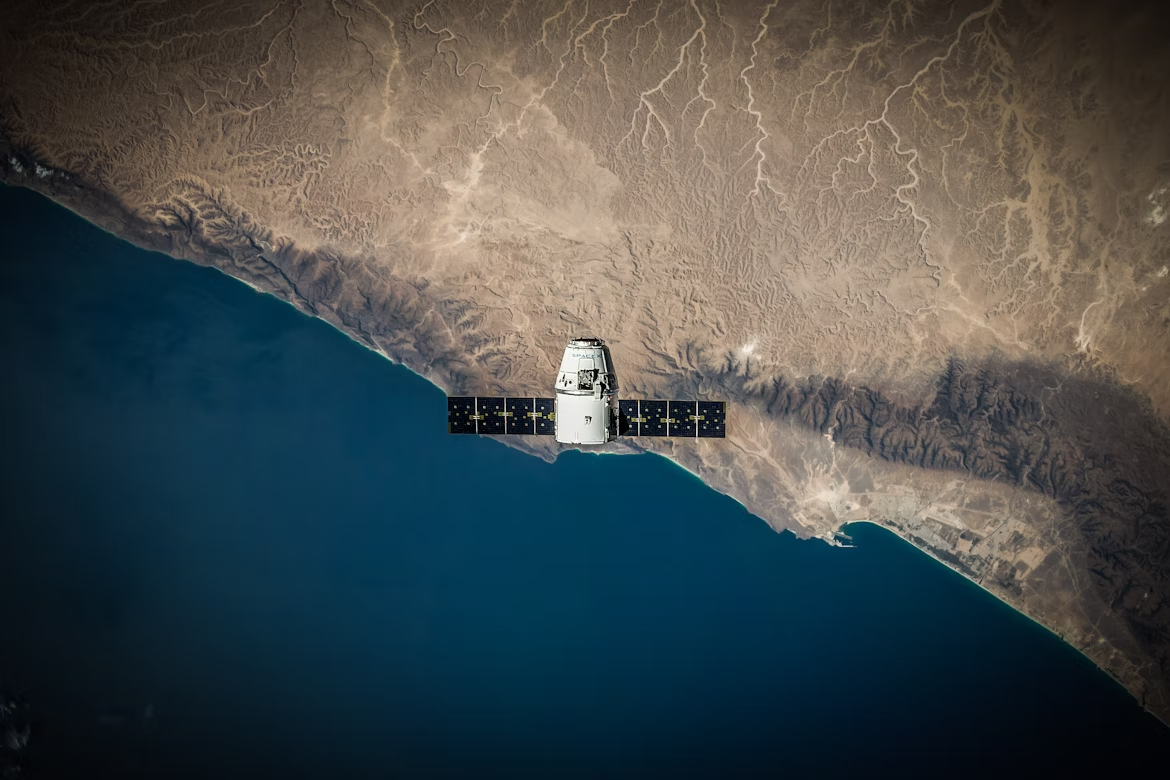
Imagine waking up to a silent sky. The stars are still there. But every artificial one is gone—no GPS signals, no weather data, no TV broadcasts, no satellite internet. If every one of Earth’s roughly 8,000 operational satellites disappeared overnight, satellite infrastructure failure would halt modern life.
These silent machines orbiting above us power nearly everything we take for granted. Losing them would mean far more than losing navigation. It would be a global crisis affecting communication, commerce, safety, and survival.
A World Without Navigation
The most immediate chaos would hit transportation. GPS (Global Positioning System) satellites provide location data used by planes, ships, trucks, and everyday drivers. Without them, airplanes couldn’t navigate efficiently or safely. Pilots would be forced to rely on outdated manual systems, leading to flight delays, reroutes, and even grounded fleets.
On the ground, trucking and logistics networks would collapse overnight. Delivery routes, port schedules, and emergency response systems all depend on precise GPS timing. Even smartphones, which rely on satellite triangulation for location, would be lost without digital guidance.
For farmers, the impact would be devastating. Modern agriculture depends on satellite positioning for automated tractors, crop monitoring, and irrigation timing. A sudden blackout could threaten global food production within weeks.
Read Why Are There So Many Roundabouts in Some Countries and None in Others? to know more about how intersections differ worldwide.
Communication Breakdown
Satellites are the invisible backbone of global communication. They transmit phone calls, television, and the Internet to billions of people. If they vanished, entire regions, especially remote and rural areas, would go dark.
Financial systems would be among the first to falter. Global banks and stock markets rely on satellite timing signals to synchronize transactions down to the millisecond. Without those timestamps, trading algorithms would fail, data would desynchronize, and markets could crash.
Weather satellites, too, would blink out, leaving meteorologists in the dark—no more hurricane tracking, wildfire monitoring, or storm forecasting. Within days, flights would be flying blind through unpredictable weather, and coastal regions would have no warning of approaching storms.
Check out How Will Climate Change Affect the Colors of the Ocean? to see how satellites help track color shifts.
The Military and Security Fallout
Governments around the world depend on satellites for national security. Surveillance, missile tracking, and communications all rely on orbital technology. Losing it overnight would create a global security vacuum.
Without early-warning systems, nuclear powers could no longer detect missile launches, heightening tensions and increasing the risk of miscalculation. Military operations would revert to older, less reliable communication methods, delaying responses and confusing command chains.
Even civilian navigation systems like GPS are intertwined with defense networks. Their sudden loss would shut down everything from disaster relief to humanitarian aid coordination.
Economic Collapse in Orbit
The satellite industry underpins trillions of dollars in global commerce. Beyond direct services like telecommunications and broadcasting, satellites support agriculture, mining, energy grids, and transportation infrastructure.
If all satellites disappeared, economies would grind to a standstill within days. Cargo ships would lose tracking systems, pipelines would lose monitoring, and credit card networks—reliant on satellite time signals—would falter. Internet services like Starlink and OneWeb, which connect rural areas, would vanish entirely, leaving millions isolated.
The ripple effect would be staggering: from delayed food shipments to the loss of emergency communication in disaster zones. The digital economy would regress decades overnight.
Curious about extreme electricity? Read What Happens When Lightning Strikes Sand?
How Would Humanity Cope?
In the immediate aftermath, countries would turn to ground-based and high-altitude alternatives. Fiber-optic networks and undersea cables would remain functional, keeping some communication alive. But rebuilding lost satellite infrastructure would take years. Launching even one satellite requires months of planning and millions in funding.
Governments might prioritize restoring GPS constellations and weather systems first, but even with global cooperation, restoring full orbital capability could take a decade. In the meantime, humanity would relearn the value of analog systems, such as paper maps, radio, and direct human coordination.
Aviation fan? See Why Are Airplane Seats Blue?
A Fragile Reminder from Above
Losing all satellites would reveal just how dependent civilization has become on a technology most people never see. Every orbiting device, whether tracking storms or connecting cell towers, plays a small part in the web that keeps our modern world running.
The scenario also highlights the growing need for space security. Satellite collisions, solar flares, or cyberattacks could one day trigger smaller-scale disruptions. Understanding our vulnerability is the first step in protecting the infrastructure that makes our world function.
The night sky might look peaceful, but it’s busier and more fragile than ever. Without satellites, humanity would lose not just its connection to space, but its connection to itself.