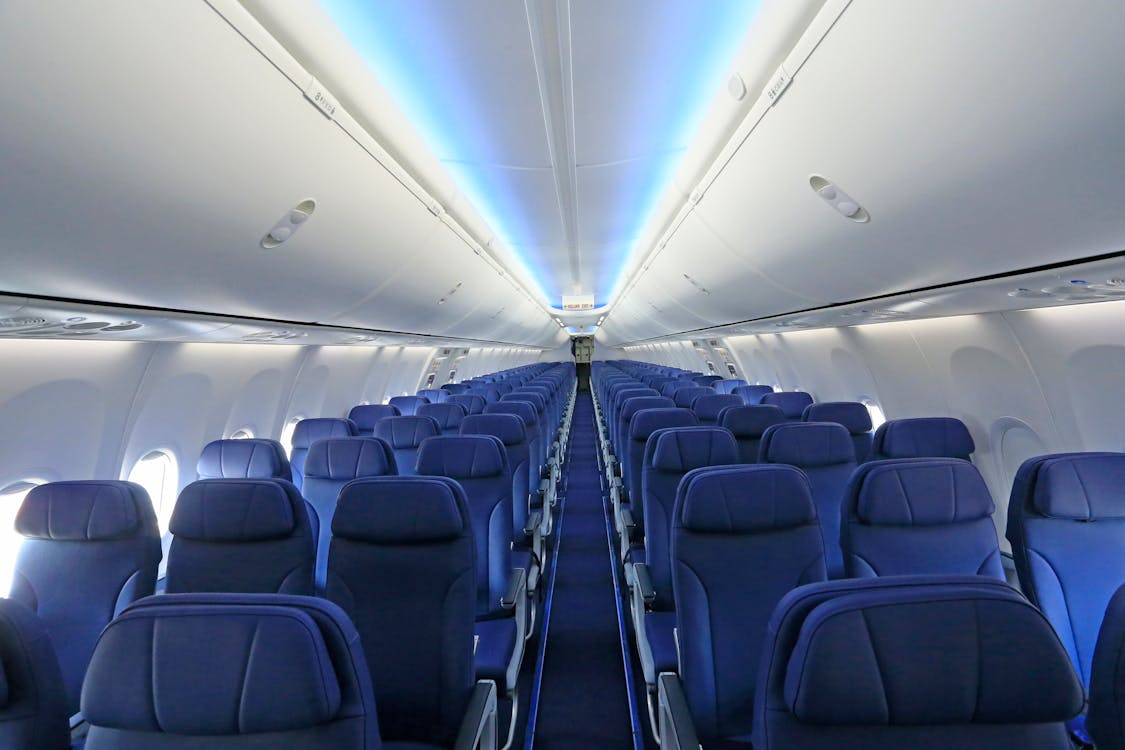
If you’ve ever wondered why almost every airplane you board has blue seats, you’re not alone. From budget airlines to international carriers, blue seems to dominate the cabin.
The reason airplane seats are blue is not just a design coincidence. Airplane seat color psychology blends design, emotion, and maintenance. The color of airplane seats is carefully chosen to influence passenger comfort, behavior, and even maintenance efficiency. Here’s the fascinating science and strategy behind why the skies are painted blue inside.
The Psychology of Calm
Blue has long been associated with calmness, trust, and stability. These are qualities airlines want to project in a setting that can make many people anxious. For decades, color psychologists have found that blue tones reduce stress and heart rate, helping people feel more relaxed.
When you step into an airplane cabin, your brain is processing more than just the space; it’s responding to color. Airlines use shades of blue to ease tension, especially during takeoff and turbulence, subconsciously. It’s the same reason hospitals and financial institutions often use blue in their designs: it communicates reliability and safety.
Studies in environmental psychology have shown that cool colors like blue can even make enclosed spaces feel larger, cleaner, and more breathable. In a metal tube flying 35,000 feet above the Earth, that sense of spaciousness and calm can make all the difference.
Curious how design shapes traffic flow, too? See Why Are There So Many Roundabouts in Some Countries.
The Power of Brand Trust
Beyond emotion, blue also plays into branding psychology. Blue is one of the most universally liked colors across cultures and demographics, symbolizing professionalism and integrity. Airlines, which are businesses built on trust, use blue to reinforce their reputations.
From British Airways and United to KLM and JetBlue, many carriers incorporate blue into their logos, uniforms, and aircraft interiors. The consistency between brand and environment creates a subtle sense of harmony: passengers associate the color with both the company’s identity and the reassuring feeling of being in safe hands.
In short, blue doesn’t just calm. It communicates competence.
Practical Benefits for Maintenance
Psychology isn’t the only reason blue dominates airline interiors. It’s also highly practical. Airplane seats take a beating. With thousands of passengers boarding and deplaning every week, spills, scuffs, and stains are inevitable. Darker shades of blue hide dirt and wear far better than lighter or warmer colors like beige or red.
Before the 1970s, some airlines experimented with brighter interiors, including orange and yellow seats. While visually cheerful, they aged quickly and looked dirty after only a few months of service. Blue, especially in mid- to dark tones, maintains a cleaner, newer appearance even after years of use.
Synthetic seat fabrics and leathers are also easier to color-match and replace in blue than in many other hues, making it more efficient for maintenance crews to keep cabins looking consistent.
Explore The Secret Life of Shopping Carts to understand how design choices drive behavior.
A Nod to the Sky
There’s also a poetic side to the color choice. Blue connects passengers to the very experience of flight. It mirrors the sky outside the windows, and is a gentle reminder of what flying represents: openness, exploration, and connection. Designers often use lighter blues on walls and ceilings to make cabins feel airy, while deeper navy tones on seats provide contrast and depth.
This layered approach creates a sense of orientation and comfort. You’re surrounded by color that feels familiar—like the horizon itself.
Modern Tweaks to a Classic Palette
While blue remains dominant, airlines are now experimenting with variations to give their interiors a unique identity. Some use cool gray-blues for a sleek, modern look, while others mix in aqua or teal tones to suggest freshness and innovation. Premium cabins often add subtle accents, such as tan leather headrests or metallic stitching, to evoke luxury without straying far from the trusted blue family.
Even futuristic designs on newer aircraft like the Airbus A350 and Boeing 787 maintain the blue theme through LED cabin lighting. These adjustable systems shift the lighting temperature throughout the flight, using soft blue hues during boarding and sleep periods to promote relaxation.
Aviation depends on quiet tech, too. Read What Would Happen If We Lost All Satellites Overnight?
Why Blue Will Keep Flying
In an age when design trends come and go, blue’s dominance in airplane interiors shows no sign of fading. It satisfies both human psychology and logistical needs. It’s calming, practical, and enduring. Passengers may not consciously notice it, but the color works quietly in the background, reducing anxiety and reinforcing the airline’s promise of safety and reliability.
So next time you buckle up in that familiar blue seat, remember: it’s not just a color. It’s a carefully chosen shade of science and psychology; one that’s been keeping travelers calm at cruising altitude for nearly half a century.