
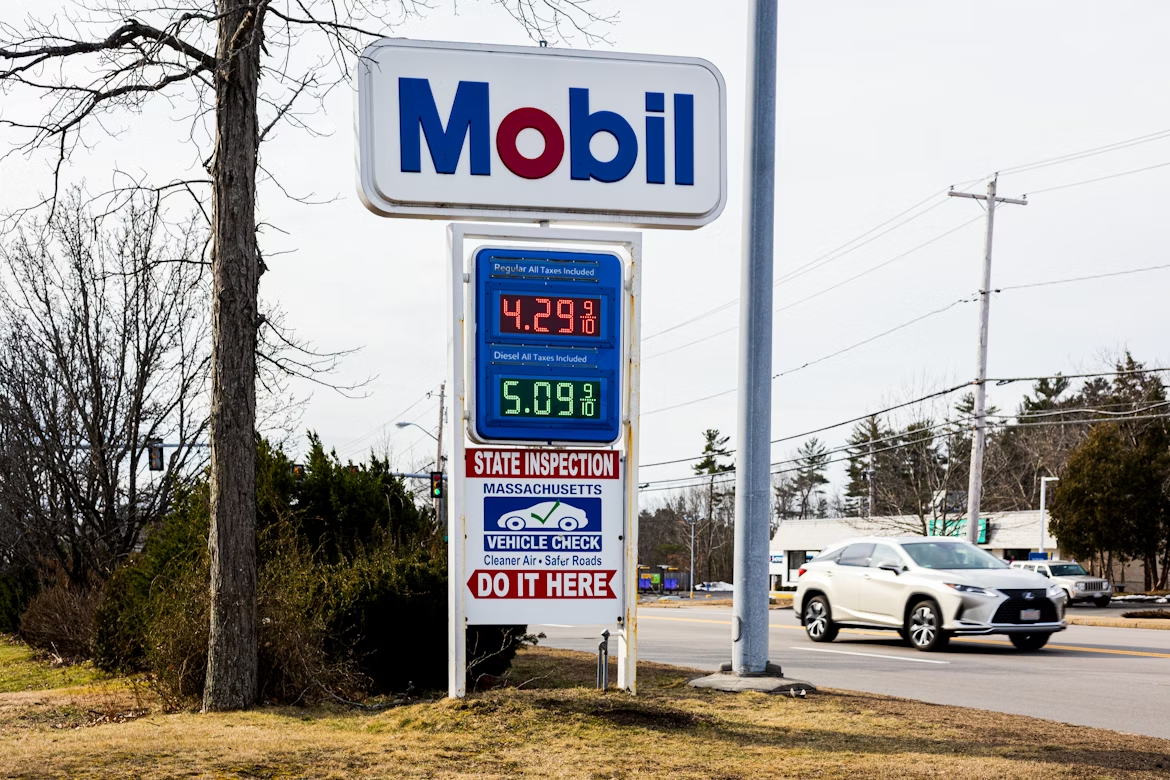
Pull up to almost any gas station in the world, and you’ll see a curious pattern: prices ending in .9, like $3.499 or $4.199 per gallon. That tiny nine-tenths of a cent might seem trivial, as if too small to matter. However, gas price psychology and history help explain why it’s there.
This pricing quirk has deep historical roots in marketing psychology, taxation, and competition that go back nearly a century. So why won’t gas stations round up—or down—to the nearest cent?
A Penny Saved, a Strategy Born
The story begins during the Great Depression of the 1930s, when fuel companies and the federal government both introduced new ways to regulate and tax gasoline. In 1932, the U.S. government imposed the first federal gasoline tax—one cent per gallon. At the time, gas cost around 15 cents a gallon, so the added penny was significant.
Rather than raise prices to a clean 16 cents, gas station owners adjusted prices by fractions of a cent to stay competitive. For example, setting rates like 15.9 cents per gallon. This not only absorbed the tax but made the price appear lower than 16 cents, even though the difference was minimal. Customers saw the number “15” and felt like they were getting a deal.
The practice quickly spread and stuck. Even as decades passed and gas prices rose dramatically, the habit of ending in .9 persisted. It’s a marketing relic that has refused to die.
Check out The Strange Economics of Penny Production for a look at why tiny coins can cost big money.
The Psychology of “Charm Pricing”
The .9 pricing strategy isn’t unique to fuel. It’s a well-documented psychological phenomenon known as charm pricing. Studies in consumer behavior show that prices ending in 9 (like $4.99 instead of $5.00) trigger the brain’s perception of a bargain.
When people read prices, they focus on the leftmost digit first—a bias called the left-digit effect. That means we subconsciously process $3.99 as “three dollars and change” instead of “almost four.” Even though the difference is just one cent, it feels significantly cheaper.
Gas stations capitalize on this same effect. A sign reading $4.19^9 looks more appealing than $4.20, even though the savings is just a fraction of a penny. When multiplied by the hundreds of gallons sold daily, the strategy can subtly sway customer behavior. This is especially true in competitive markets where stations are side-by-side.
The Role of Competition and Perception
In the highly competitive fuel industry, even the most minor differences matter. Drivers often compare prices as they pass multiple stations, and the first price they see tends to determine where they stop. A price difference of just one-tenth of a cent can mean the difference between a full forecourt and an empty one.
Gas stations also face pressure to improve price visibility. Unlike most goods, gas prices are displayed on giant roadside signs, visible to every passing car. Rounding up could make one station appear more expensive than its neighbor, even if the difference is less than a penny. As a result, no retailer wants to be the first to drop the decimal. It’s a psychological arms race that keeps everyone locked into the same pattern.
Explore The Hidden Science Behind Your Favorite Candle Scents to see how aroma shapes mood and choices.
The Math Behind Nine-Tenths of a Cent
So what does that nine-tenths of a cent actually mean in practice? On a typical 15-gallon fill-up, it amounts to about 13.5 cents total, which is barely enough to buy a stick of gum. However, multiplied across millions of gallons sold every day, it adds up to millions of extra dollars in annual revenue for fuel companies nationwide.
The fractional pricing also gives stations a small margin to adjust prices without visibly crossing key psychological thresholds. For instance, a cost of $3.499 can be raised to $3.509 without appearing as a “jump” to $3.51. It’s subtle, but in marketing, subtlety often means stability.
Why We Still Haven’t Rounded Up
Some economists and lawmakers have argued that fractional pricing is outdated and confusing. Over the years, several U.S. states have proposed laws requiring gas prices to be rounded to the nearest cent. Yet these proposals rarely pass. This is partly because rounding up could make stations look more expensive, and rounding down would cut into profits.
Technology hasn’t helped either. Gas pumps and pricing systems are still designed to calculate and display fractions of a cent, and consumers have grown accustomed to seeing them. Removing the nine-tenths would require a nationwide overhaul of equipment and pricing structures. That’s an expensive undertaking for an industry that thrives on razor-thin margins.
Even digital fuel signs and electronic payment systems continue to display prices in .9, more out of tradition than necessity. The number has become part of the visual language of gas stations. It’s so ingrained that it feels strange not to see it.
Learn more about The Surprising History of Everyday Inventions That Started as Mistakes.
The Tiny Fraction That Changed Everything
Ultimately, gas prices ending in .9 are a perfect example of how human psychology and market habits intertwine. What began as a minor accounting adjustment nearly a century ago has evolved into a lasting symbol of value that continues to influence consumer choices every day.
While that nine-tenths of a cent may not mean much to your wallet, it represents something bigger: how deeply our perception of price—and of fairness—is shaped by a single digit.
So next time you’re at the pump, glance at the sign and remember: that tiny “.9” isn’t just a number. It’s a 90-year-old marketing trick that still works, proving that even in economics, perception is everything.