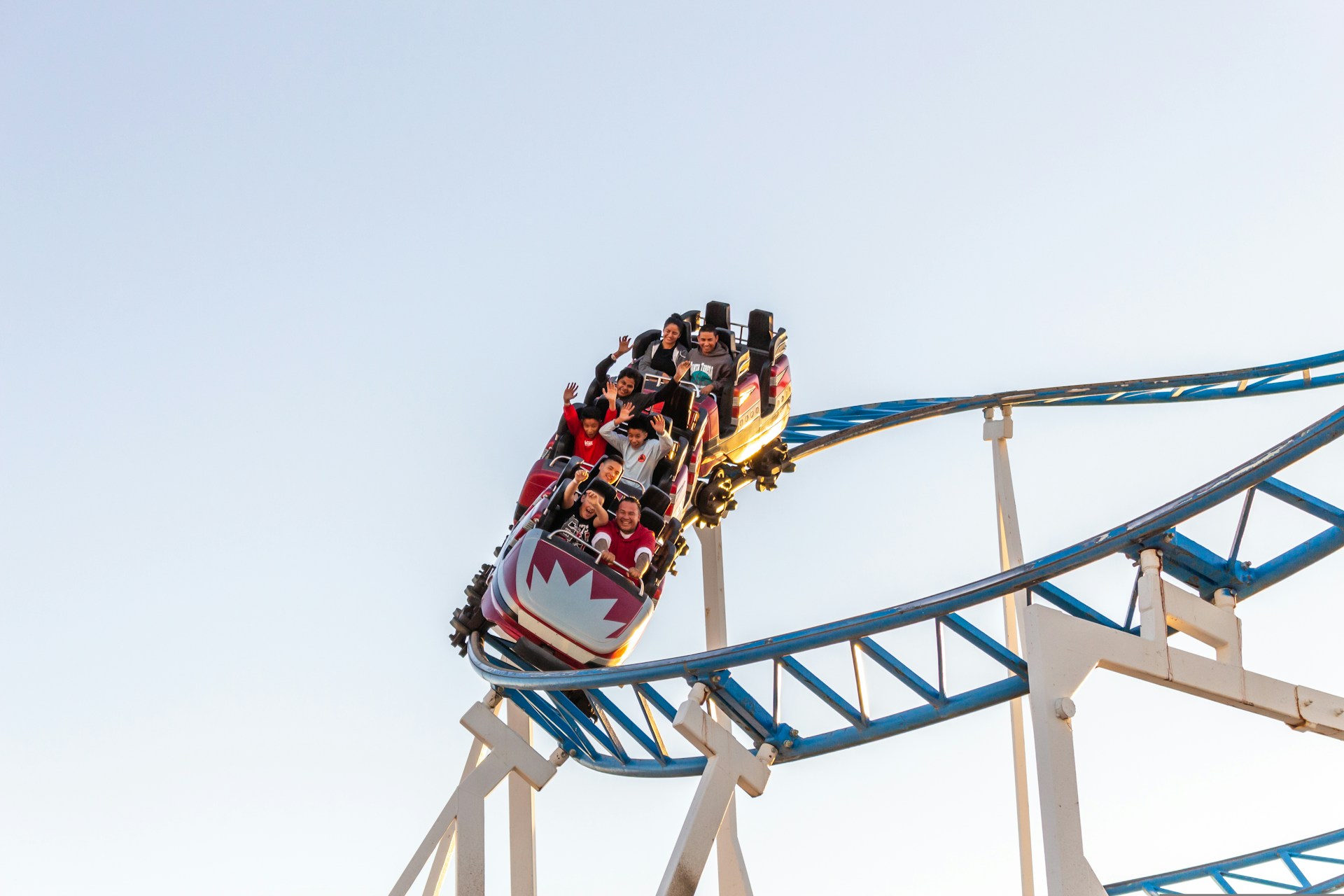
You wait eight hours for a two-minute ride that makes your body think it’s dying. Your heart pounds, your palms sweat, and every survival instinct screams danger. Then you get off and immediately want to do it again. What’s happening in your brain?
The Fight-or-Flight Hijack
Researchers measured heart rates on the double-corkscrew Coca-Cola Roller in 1980s Glasgow and found something remarkable. Heart beats per minute more than doubled from an average of 70 beforehand to 153 shortly after the ride began. Some older riders got uncomfortably close to what would be medically unsafe for their age.
This triggers your fight-or-flight response, characterized by a pounding heart, faster breathing, and an energy boost from the release of glucose. Your body genuinely believes it’s in danger. The twist is that your prefrontal cortex, the rational part of your brain, knows you’re strapped into a tested machine with redundant safety systems.
This contradiction creates the magic. Your body floods with stress chemicals while your conscious mind stays calm. The result feels like danger without actual risk.
The Chemical Cocktail of Thrill
The moment you crest that first hill, your brain dumps a cocktail of hormones into your bloodstream: adrenaline, dopamine, and cortisol. These brain chemicals stimulate a natural high, giving you a boost of energy that makes you feel more alert and alive.
Bungee jumpers offer a window into this chemistry. Novice jumpers not only reported increased feelings of well-being, wakefulness, and euphoria just after completing a jump, but they also had raised levels of endorphins in the blood. Higher endorphin levels corresponded directly with stronger feelings of euphoria.
But here’s where individual differences matter. Individuals with higher levels of dopamine tend to score higher on measures of sensation-seeking behavior. When researchers gave people haloperidol, which disrupts dopamine’s effects within the brain, it led to a measurable decrease in sensation-seeking behavior.
Read More: Why Are Airplane Seats Blue?
Why Some Love It and Others Don’t
Brain chemistry explains why your friend screams with joy while you’re gripping the safety bar in terror. Higher dopamine levels may make people more prone to sensation-seeking behaviors, ranging from harmless activities like roller coaster rides to more extreme pursuits.
The evidence linking speed to thrill-seeking isn’t compelling. Many people drive above speed limits without being sensation seekers. The real draw is the visceral sensation of fear itself, much like watching a horror movie.
The Safe Scare Phenomenon
The contrast between real and perceived danger creates what psychologists call a “safe scare”—an addictive sense of euphoria that leaves us wanting more. Your body experiences genuine terror while your mind maintains a safety override.
A German study found that heart rates spiked to over 155 beats per minute during rides. Surprisingly, the highest heart rates were recorded during the slow climb to the top of the first drop, emphasizing the key role of fear and anticipation rather than the actual plunge.
This anticipation matters. Your amygdala, the brain’s fear center, processes the impending threat during that slow climb. The longer you anticipate danger, the stronger the chemical release when it arrives.
Read More: Why Do We Yawn When We See Others Yawn?
The Social Bonding Element
Roller coasters offer more than solo thrills. Sharing fear strengthens social bonds through the release of oxytocin, the bonding hormone associated with trust and connection. You scream, laugh, and recover together, creating memories that cement relationships.
Think about your last theme park visit. The shared experience of terror and relief builds connection. Experiencing and overcoming mild fear in controlled settings can reduce stress, boost confidence, and remind us we’re more resilient than we think.
The Age Factor
Interest in thrill-seeking peaks in early adulthood and declines with each passing decade. Older adults become less inclined to participate in activities like roller coasters. Perhaps experiencing your heart rate spiking dangerously close to medically accepted risk levels loses its appeal.
This isn’t just a matter of preference, but a matter of biology. As we age, our dopamine production naturally declines, potentially reducing the reward we get from sensation-seeking activities.
The Paradox of Pleasure
Roller coasters exploit a quirk in human psychology: we can enjoy physiological arousal we would normally find unpleasant, provided we feel safe. The same pounding heart and sweaty palms that signal anxiety during a job interview become excitement markers when we’re strapped into a coaster.
Your brain essentially gets tricked into turning fear into fun through context. The structured environment, visible safety measures, and social validation all signal that despite what your body feels, you’re not actually in danger.
People enjoy roller coasters thanks to this combination—speed, conquering fear, and the positive effects of massive physiological arousal. The ride itself lasts minutes, but the chemical high and sense of accomplishment linger long after.
Read More: Why Do We Love Watching Things Fall (Like Dominoes or Sand Art)?