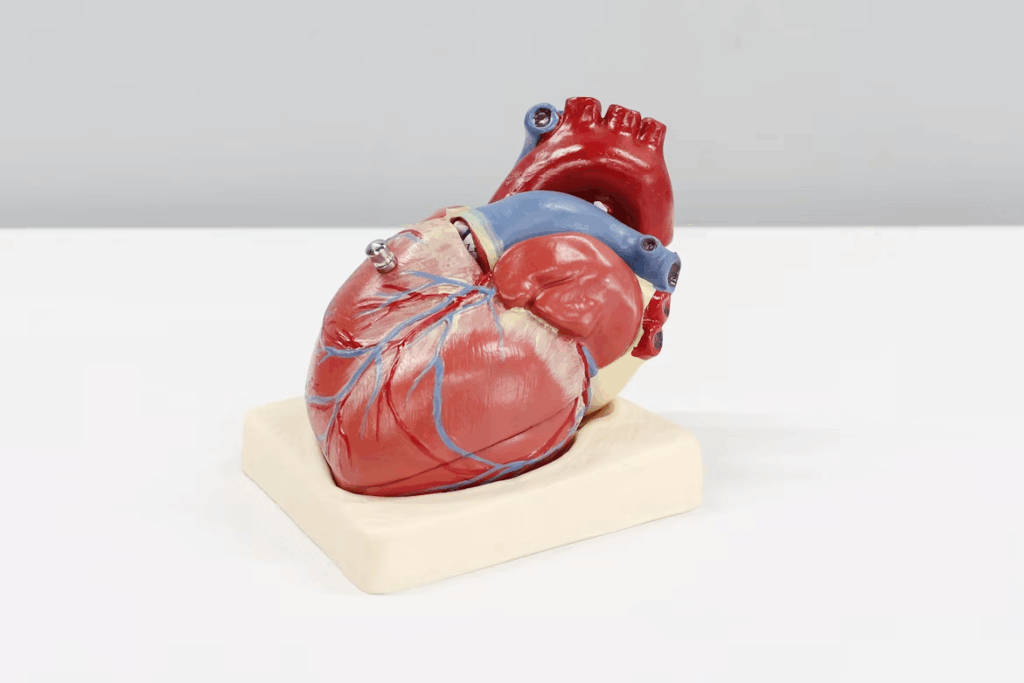
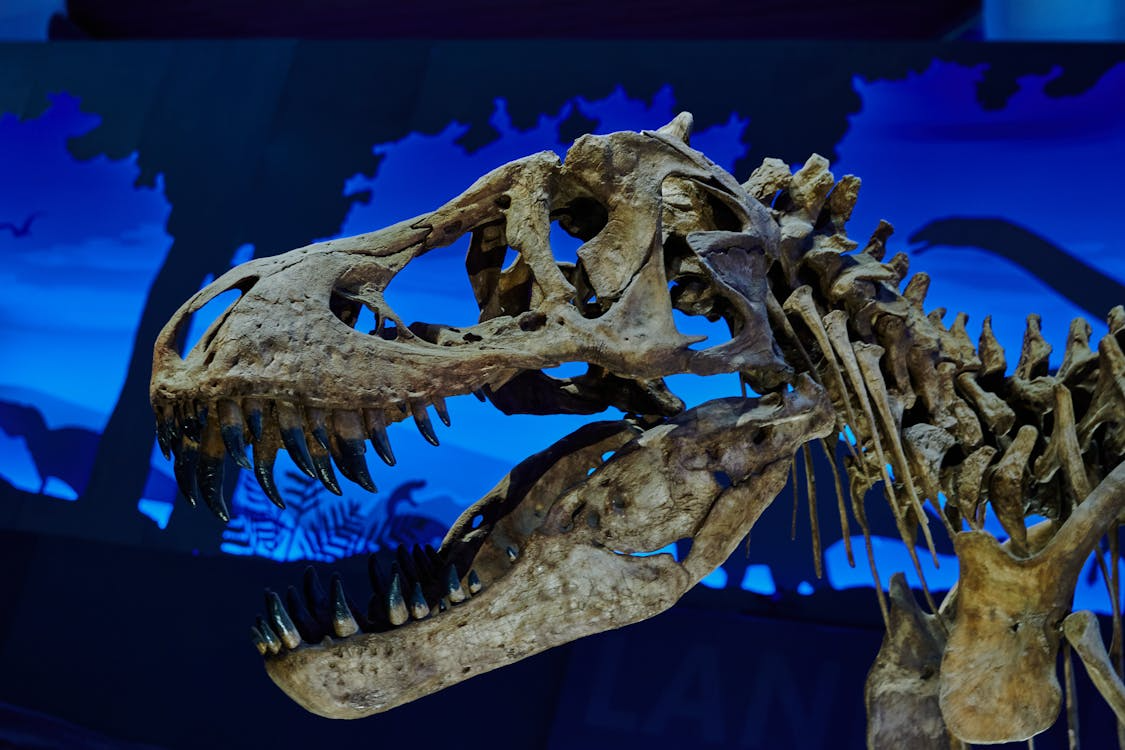
From Jurassic Park to real-life paleontology labs, the idea of bringing dinosaurs back from extinction has long fascinated both scientists and storytellers.
The thought of resurrecting creatures that ruled the Earth 65 million years ago is thrilling. But how close are we, really? Could DNA science ever bring the age of dinosaurs back to life?
The Limits of Ancient DNA
The foundation of de-extinction lies in DNA recovery, but that’s where the first problem appears. DNA, the molecule that stores genetic information, is notoriously fragile. Even under the best conditions—cold, dry, and sealed away from sunlight—it degrades over time.
Studies suggest that DNA has a half-life of about 521 years, meaning after that time, half of its bonds break down. After about 6.8 million years, all recognizable DNA sequences would be gone. Since the youngest dinosaurs died around 66 million years ago, their genetic material is far beyond recovery.
Despite hopeful scenes in Jurassic Park, no scientist has ever found intact dinosaur DNA—not even from blood trapped in amber. While amber can preserve insects beautifully, it doesn’t prevent the decay of delicate molecules like DNA. Fossils, though stunning in detail, are mineralized impressions—stone copies of bone, not biological tissue.
Read Could Humans Live Forever With Gene Editing? for where CRISPR is heading next.
Lessons from Frozen and Fossilized Finds
While dinosaur DNA is lost, scientists have made remarkable discoveries in more recent species. Woolly mammoth DNA, for example, has been extracted from permafrost-preserved remains over one million years old. That’s orders of magnitude younger than dinosaurs, but it shows the limits of molecular survival.
Researchers have also discovered proteins and soft tissue remnants in some dinosaur fossils. The most significant example was by paleontologist Mary Schweitzer, who found preserved collagen fibers in a Tyrannosaurus rex bone in 2005. These findings hint that biological traces can survive extraordinary time spans, but proteins alone aren’t enough to rebuild a genome. Without complete DNA, there’s no blueprint for resurrection.
The Bird Connection: Living Dinosaurs Among Us
Here’s the twist: dinosaurs are already among us. They are just in a very different form. Birds are the direct descendants of theropod dinosaurs, sharing skeletal structures, nesting behaviors, and even genes linked to feathers and metabolism.
This evolutionary connection has inspired scientists to explore “reverse engineering” birds to express ancestral dinosaur traits. One team led by Jack Horner, an advisor to Jurassic Park, has experimented with chicken embryos to activate dormant genetic pathways. By tweaking developmental genes, they’ve produced chickens with tooth-like structures or longer tails—traits reminiscent of their dinosaur ancestors.
These “dino-chickens,” while not actual dinosaurs, show how evolution’s genetic footprints remain inside modern species. It’s a form of backward evolution, guided by modern biotechnology.
Also read Could Trees Really Communicate Through Underground Networks? for surprising biology facts.
The Science of De-Extinction
Even though dinosaurs themselves are out of reach, de-extinction science is moving forward with other species. Projects like Revive & Restore are working to bring back recently extinct animals such as the woolly mammoth, passenger pigeon, and Tasmanian tiger (thylacine) using advanced gene-editing tools like CRISPR-Cas9.
The process typically involves inserting recovered DNA sequences from the extinct species into the genome of a close living relative. For instance, scientists are editing Asian elephant DNA with mammoth genes to create a hybrid capable of surviving cold climates.
If successful, it would mark the first actual case of “de-extinction.” But even these projects rely on relatively complete DNA, which dinosaurs can’t provide. The further back in time we go, the more genetic information is lost to decay and geological change.
Explore How Close Are We to Printing Human Organs? to compare another fast-moving biotech frontier.
Could We Rebuild DNA from Scratch?
In theory, one might imagine reconstructing dinosaur DNA digitally—piecing together genes using comparisons from birds, reptiles, and other ancient species. But this would be guesswork, not an accurate reconstruction. Even a tiny error in gene sequence could result in a creature that doesn’t survive or doesn’t resemble a dinosaur at all.
Creating a viable dinosaur would also require compatible egg cells, mitochondria, and developmental environments. No modern species could serve as a perfect surrogate, and no lab on Earth could replicate the exact chemical conditions of the Mesozoic era. In short, we can model a dinosaur’s genome. However, we can’t build one. At least not yet.
Consider Are We Alone? The Math Behind the Search for Life for a big-picture look beyond fossils.
What We’ve Gained Instead
While the dream of seeing a living T. rex remains out of reach, the pursuit of that dream has fueled some of the most important advances in modern genetics and paleontology. Techniques developed for ancient DNA research now help scientists study evolution, human ancestry, and disease. The same tools imagined for “Jurassic Park” are being used to fight extinction, not reverse it.
And in a way, dinosaurs never truly vanished. Their genetic legacy lives in every pigeon, hawk, and hummingbird that takes flight today. The next time you see a bird stretch its wings, you’re looking at the closest thing Earth has to a living dinosaur—no amber extraction required.