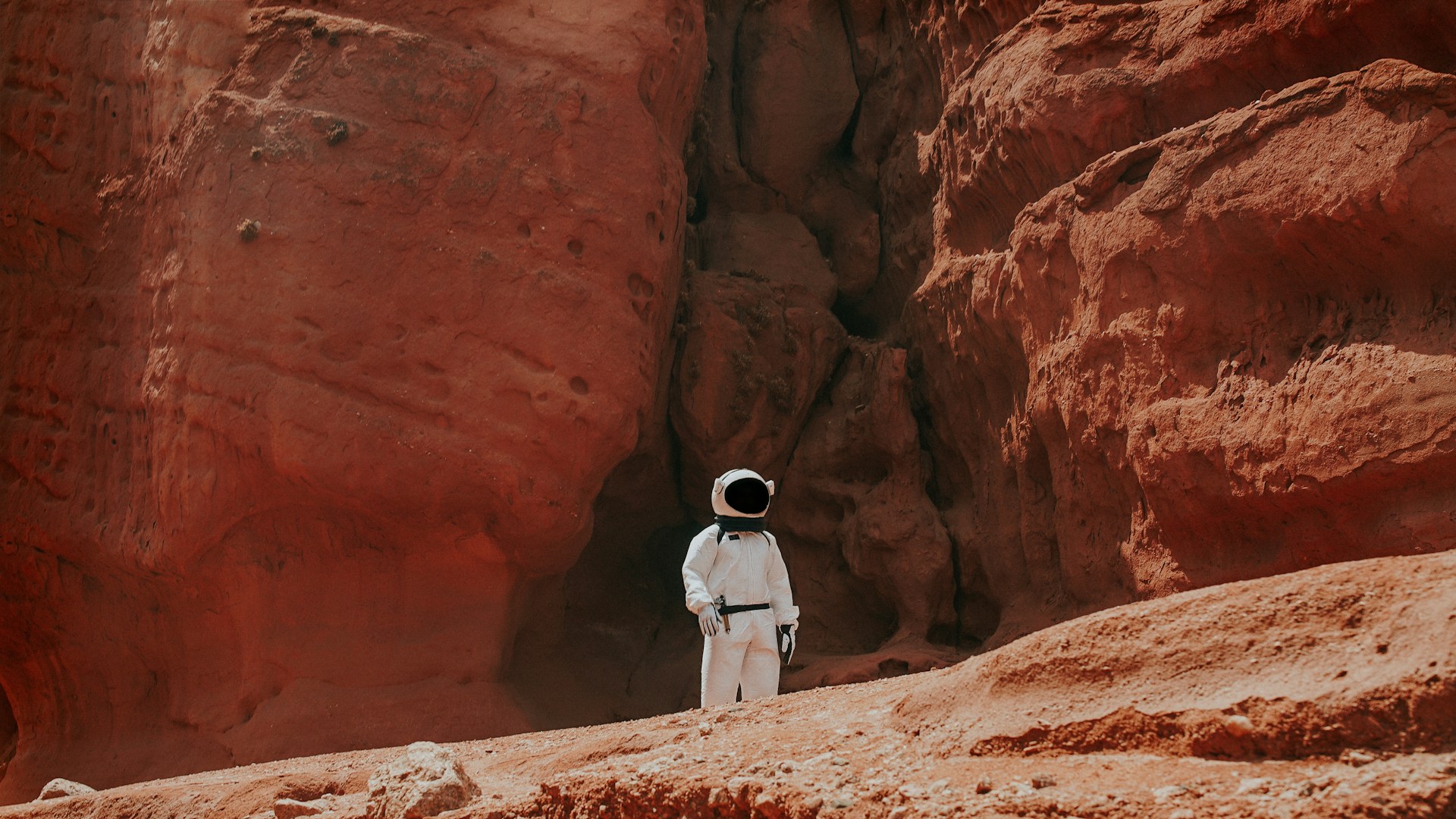
Picture waking up to a frozen sunrise, where temperatures drop to negative 100 degrees Fahrenheit. Your morning breath would literally boil away in the near-vacuum atmosphere. Welcome to Mars, where current technology could technically keep you alive, but barely, and not comfortably.
The Breathing Problem
Mars’ atmosphere is composed of 95% carbon dioxide, which is poisonous to humans, and is approximately 100 times thinner than Earth’s. Without a pressure suit, you would die within minutes because exposed bodily liquids such as saliva, tears, and the liquids wetting the alveoli within the lungs would boil away.
NASA’s MOXIE device, currently on the Perseverance rover, can convert carbon dioxide into oxygen. But here’s the reality check: the device produces oxygen at the same rate as one small tree on Earth, which equates to enough oxygen produced over two years for a human to survive just 3.5 hours. You would need an industrial-scale oxygen production running continuously.
Water: Frozen and Hard to Reach
Mars once had more water than the Arctic Ocean, and some of this remains trapped in the Martian polar caps. The 2024 discovery of abundant groundwater beneath the surface offers hope, but extracting it presents massive challenges.
Current extraction technology can extract about 60% of the water from Martian ice and soil, but it requires heating the soil until the water evaporates, then condensing and storing it. Mars One claimed its astronauts would have 50 liters of recyclable water daily, but the company collapsed in 2019 before proving this concept at scale.
Read More: How Will Climate Change Affect the Colors of the Ocean?
Food Production in a Hostile Environment
Growing food on Mars won’t resemble farming on Earth. The soil lacks essential nutrients and contains perchlorates, toxic chemicals that would poison crops. You cannot simply plant seeds and add water because, in low gravity, free soil and water would float around and contaminate everything.
Hydroponic farming in sealed, climate-controlled chambers offers the most realistic option. Studies of cyanobacteria showed they survived for over 700 days in space under simulated Martian conditions, suggesting blue-green algae could provide both food and oxygen production.
Read More: What Would Happen If We Lost All Satellites Overnight?
Shelter: Protection from Everything
Even the most ideal region of Mars, the equator, experiences temperature swings from daytime highs of 20 degrees Celsius to nighttime lows of -73 degrees Celsius at the height of summer. Your habitat would need to handle these extremes while also protecting against deadly radiation.
Without Earth’s magnetic field and thick atmosphere, exposure to radiation on Mars could cut 15 to 24 years off an astronaut’s life. Underground lava tubes offer natural protection, but their structural integrity remains untested. Surface habitats would require thick shielding, possibly made from Martian soil using 3D printing technology that NASA is currently developing.
The Psychological Challenge
Beyond physical survival, the isolation would be crushing. You would be 140 million miles from Earth with communication delays of up to 20 minutes each way. No fresh air, no natural landscapes, no spontaneous trips outside. Your entire existence would happen inside pressurized tubes and domes.
Current Technology Reality Check
With today’s technology, you could technically survive on Mars, but it would require constant vigilance and perfect functioning of life support systems. One major equipment failure could be fatal. You would spend most of your time maintaining systems, recycling waste, growing food in hydroponic tanks, and rationing resources.
The reality is that Mars colonization with current technology would resemble living inside a submarine at the bottom of the ocean, except the ocean is frozen, toxic, and bombarded with radiation. Every resource would need to be carefully managed, recycled, and protected.
Scientists estimate that developing the technology needed for comfortable, long-term habitation on Mars would take centuries and require research breakthroughs that have not yet been achieved. For now, survival would be possible but miserable, a continuous battle against an environment that wants you dead.
The question isn’t really whether we could survive on Mars with today’s technology. The question is whether anyone would want to once they understood what daily life would actually entail.
Read More: Could Humans Live Forever With Gene Editing?