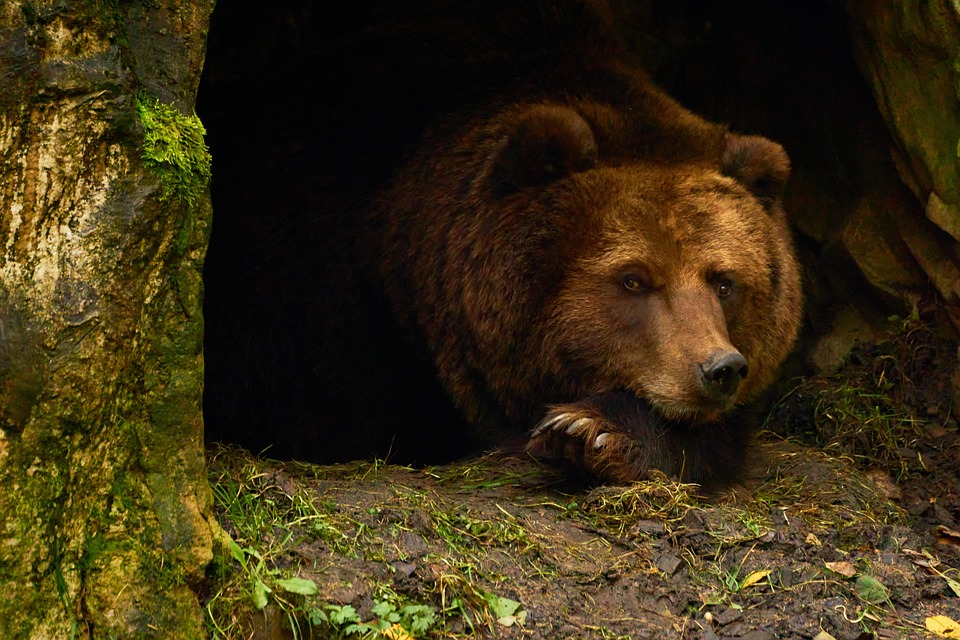
Every winter, bears curl up in dens, their heart rates slowing, their body temperatures dropping, and their metabolisms nearly shutting down. For humans, the idea of doing the same sounds like science fiction: a deep, restorative sleep that lasts for weeks or even months.
Months later, bears emerge from hibernation lean but alive, having survived without eating, drinking, or moving much. But what if hibernation wasn’t just for animals? Could humans ever truly hibernate like bears?
The Biology of Hibernation
Hibernation is not just sleeping; it’s a metabolic marvel. Animals that hibernate enter a state called torpor, in which body temperature, heart rate, and breathing decrease drastically to conserve energy. A black bear’s heart can slow from 55 beats per minute to just 8. Its body temperature drops by only a few degrees, but its metabolism plummets by more than 70%, allowing it to survive the harsh winter without food or water.
During this time, bears recycle waste products, such as urea (which would generally be toxic to humans), into proteins that sustain their muscles. That’s why hibernating bears don’t lose muscle mass despite months of inactivity. It’s a feat that has fascinated scientists studying human longevity and space travel alike.
For smaller mammals like ground squirrels or hedgehogs, the transformation is even more extreme. Their body temperatures can fall near freezing, and their breathing slows to only a few breaths per minute. Periodically, they awaken briefly to maintain vital functions before slipping back into torpor.
See How Close Are We to Printing Human Organs? for another frontier in bio-innovation.
Humans and the Limits of Physiology
Humans don’t hibernate naturally, but our bodies share some physiological capabilities that hint it might one day be possible. We can enter mild torpor-like states under certain conditions, such as hypothermia or medically induced cooling during surgery, when doctors lower a patient’s body temperature, thereby decreasing metabolic activity and protecting organs and the brain during critical procedures.
This process, called therapeutic hypothermia, slows oxygen consumption and has saved lives after cardiac arrest and stroke. While it’s far from true hibernation, it demonstrates that the human body can tolerate—and even benefit from—temporary metabolic suppression.
In 2006, scientists successfully induced a reversible torpor state in mice by exposing them to hydrogen sulfide gas, which temporarily slowed their metabolism and oxygen use. The discovery sparked the question: if it works in mammals, could it one day work in humans?
Also read Could Humans Live Forever With Gene Editing? for where biology meets longevity.
The Future of Induced Hibernation
Researchers are exploring ways to induce synthetic hibernation in humans, particularly for medical applications and space exploration. In emergency medicine, induced hibernation could help trauma patients survive severe injuries by buying time until treatment is available. By slowing metabolism and reducing oxygen demand, doctors could potentially extend survival in critical cases where every minute counts.
NASA is also interested. Long-duration space travel, such as a mission to Mars, poses enormous challenges, from food storage to mental health. If astronauts could enter a torpor-like state for weeks or months, they would need less food and oxygen, face fewer psychological stresses, and reduce the risks of radiation exposure during the journey. Experiments with animals in microgravity conditions are already underway to test the feasibility of such “deep-sleep pods.”
The biggest hurdle, however, lies in safely controlling and reversing the process. Lowering metabolism too much can cause organ failure, while maintaining body temperature and circulation at low activity levels remains a complex balancing act.
Explore Could Dinosaurs Be Brought Back With DNA? to compare what’s possible and what isn’t in biotech.
Lessons from Nature
Nature offers clues to solving these challenges. Not all hibernators are small mammals. For example, some primates, such as the fat-tailed dwarf lemur of Madagascar, undergo seasonal hibernation for up to 7 months each year. This makes them the closest living model for understanding whether humans could ever do the same.
Researchers studying lemurs have found that hibernation involves genetic switches that alter how cells use energy and manage waste. If scientists can unlock similar molecular pathways in humans, controlled hibernation might become a reality. This could occur not by freezing the body, but by “reprogramming” metabolism to slow down naturally.
Even within humans, there are curious parallels. During certain meditative or survival states, people have been recorded with dramatically reduced breathing and heart rates without harm. These rare examples suggest that with the right biological trigger or technological aid, humans might one day be able to mimic the essence of hibernation.
See Can Animals Sense Natural Disasters Before Humans Can? for how wildlife reacts to extreme conditions.
The Promise and the Paradox
The benefits of human hibernation would be extraordinary: reduced aging during space travel, lower resource needs during disasters, and new frontiers in emergency medicine. Yet it also raises profound ethical and biological questions. How long could someone safely remain in suspended animation? What happens to the mind when consciousness pauses for months?
Still, the line between science fiction and reality is narrowing. Each year, new studies reveal more about how animals manipulate their biology to survive extreme environments. It may not be long before humans learn to borrow a few tricks from our fur-covered, cave-dwelling counterparts.
A Long Winter’s Dream
For now, true human hibernation remains a dream, but a scientifically grounded one. Whether for healing, survival, or interplanetary exploration, the idea taps into an ancient desire to rest deeply and wake renewed. As science learns more from bears, lemurs, and other masters of metabolic magic, we may one day press “pause” on our own biology, curling up for a long sleep through the storms of space or time itself.