
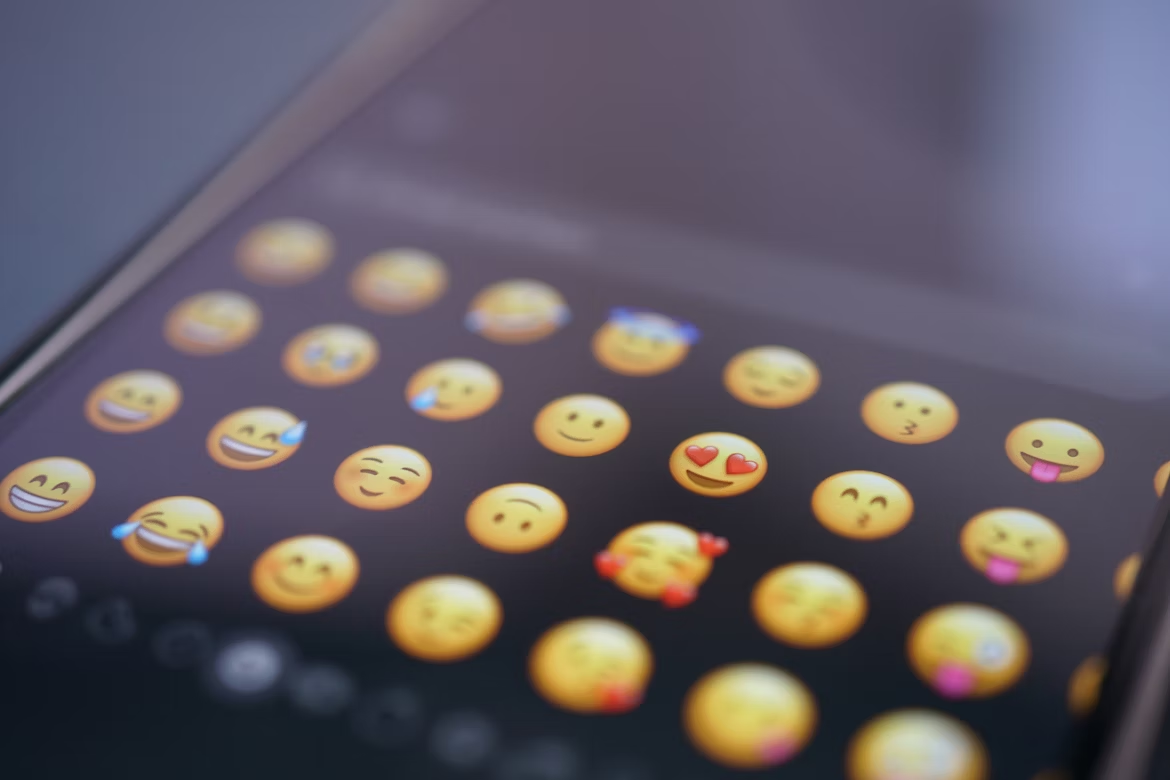
In just a few decades, tiny digital symbols have transformed the way we communicate. The history of emojis begins with a sideways smiley and evolves into a vast visual language that transcends borders and words.
Emojis are now so deeply woven into modern communication that it’s hard to imagine texting, emailing, or posting online without them. But where did emojis come from? How did they become a global phenomenon?
The Humble Beginnings: The Birth of the 🙂
Before emojis, there were emoticons—a blend of “emotion” and “icon.” The first documented emoticon appeared in 1982, when computer scientist Scott Fahlman at Carnegie Mellon University suggested using 🙂 and 🙁 to distinguish jokes from serious messages on an online bulletin board. His idea was meant to bring clarity and warmth to the often flat tone of digital text.
Within months, the sideways smiley face spread across early internet communities. Other variations followed: 😉 for winks, :-O for surprise, 😛 for playfulness. Though primitive, these text-based symbols solved a key problem of online communication: how to express tone, emotion, and humor in plain text.
Curious how language morphs over time? Read The Strange Origins of Everyday Phrases We Still Use.
Japan’s Role in the Emoji Revolution
The next leap came from Japan in the late 1990s, when designer Shigetaka Kurita created the first set of 176 emojis for NTT DoCoMo’s i-mode mobile internet platform. Each icon was just 12 pixels by 12 pixels, designed to convey emotion and context in the limited space of early text messages.
Kurita’s creations included familiar faces—smiling, frowning, crying—as well as symbols for weather, sports, technology, and daily life. His inspiration came from Japanese manga, street signs, and even weather forecasts. The goal was simplicity: to replace long messages with quick, universally understood images.
Though modest in scope, Kurita’s emoji set became a sensation in Japan. Other mobile carriers soon developed their own versions, and by the early 2000s, emojis had become a cornerstone of Japanese texting culture.
See Why Do Some People See More Colors Than Others? to understand what piques attention.
The Global Takeover: From Japan to the World
The real global explosion began when Apple introduced emojis to the iPhone in 2008. Initially hidden from users outside Japan, the emoji keyboard was quickly discovered and unlocked by international users. Once Apple made it official in later updates, emojis spread like wildfire across Western cultures.
Google and other smartphone makers soon followed, and the Unicode Consortium, the organization that standardizes text characters worldwide, stepped in to formalize emojis. This move ensured that a smiley face sent from one device would appear the same on another, no matter the brand or platform.
Once standardized, emojis went from novelty to necessity. Social media platforms integrated them, marketing campaigns used them, and linguists began studying them as a new form of digital expression. In 2015, Oxford Dictionaries even named the “Face with Tears of Joy” 😂 as its Word of the Year. This recognition cemented that emojis had become a language in their own right.
The Psychology and Power of Emojis
Why did emojis take over so quickly? Because they fill a gap left by written language. In a face-to-face conversation, tone of voice and facial expression convey emotion. Online, those cues disappear—so emojis step in.
Studies show that using emojis in digital communication increases perceived warmth and friendliness, helping people interpret intent more accurately. They’re also cognitively efficient: the brain processes images faster than words, making emojis a shortcut to emotional understanding.
In essence, emojis reintroduce body language into digital conversation. Whether you send a heart ❤️, a thumbs-up 👍, or a sarcastic eye-roll 🙄, you’re adding emotional texture that text alone can’t capture.
See Why Does Music Give You Goosebumps? for a look at how feelings travel faster than words.
Expanding Representation and Meaning
As emojis evolved, so did the conversation around diversity and inclusivity. The original sets were heavily limited and often reflected a narrow range of cultural symbols and skin tones. In the mid-2010s, Unicode began expanding representation, adding skin tone modifiers, same-sex couple emojis, and icons representing global foods, religions, and activities.
Today, new emojis are proposed annually by users worldwide. The Unicode Consortium reviews submissions and decides which icons make the cut, balancing cultural demand with design feasibility. Recent additions include gender-neutral figures, accessibility symbols, and even culturally specific foods like falafel and bubble tea.
These updates reflect a vital shift: emojis have become more than cute symbols. They’re cultural markers that express identity and belonging in a globalized world.
From Pixels to Pop Culture
Emojis have now crossed into mainstream art, film, and marketing. They appear on clothing, in advertising, and even in Hollywood movies (like The Emoji Movie, for better or worse). Brands use them to connect emotionally with consumers, and politicians, musicians, and celebrities employ them to humanize their public personas.
They’ve even inspired academic research. Linguists study emojis as the world’s fastest-evolving form of communication, while psychologists examine how they influence perception and empathy in online spaces. In many ways, emojis have become a shared emotional language. They are visual punctuation for the digital age.
Don’t miss Could AI Ever Dream? for more on evolving AI tech.
The Future of Emoji Communication
As technology continues to evolve, so will emojis. Animated emojis, custom “Memojis,” and AI-generated expressions are already blurring the line between personal identity and digital interaction. The next frontier may include 3D, interactive, or context-aware emojis that adapt their expressions based on message tone.
Yet no matter how advanced they become, their essence will remain the same: a simple, universal way to show what words can’t. From sideways smileys to a complete emotional lexicon, emojis remind us that even in the digital age, human connection is still about feelings, not just words.