
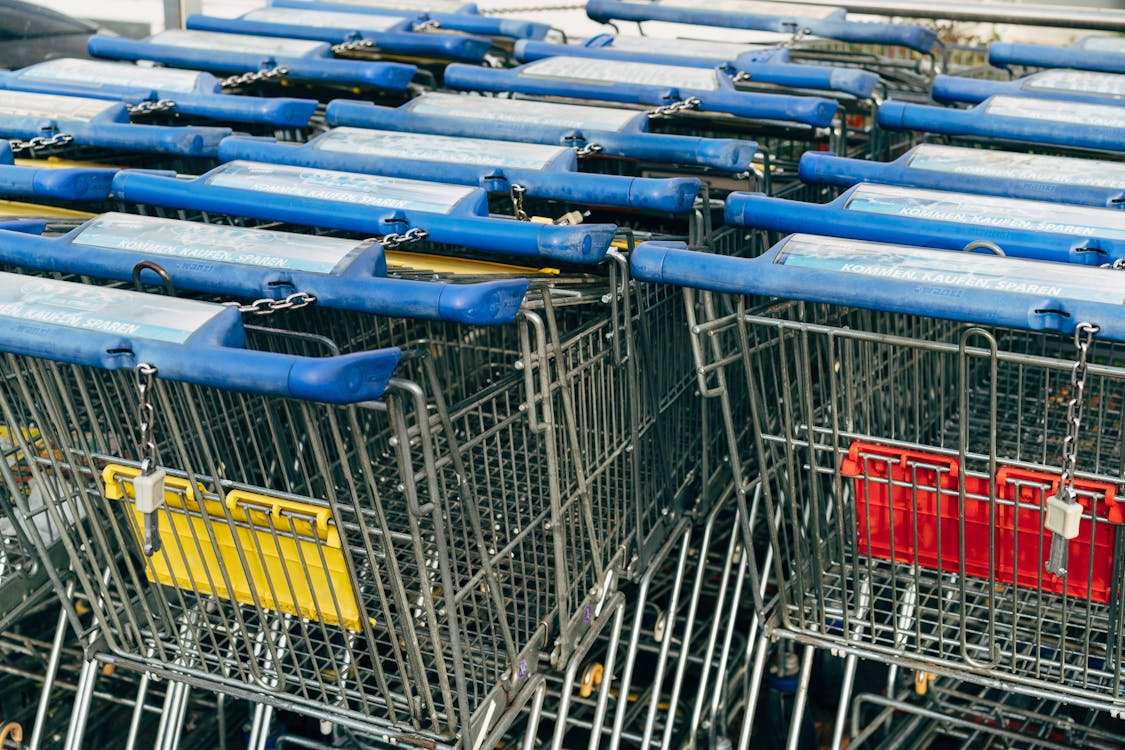
They squeak, they rattle, and they’re often taken for granted. However, the humble shopping cart is one of the most influential inventions in modern consumer life.
From its creation in the 1930s to its presence in supermarkets around the world today, the history of shopping carts has shaped how we shop, how much we buy, and even how stores are designed. Behind those metal frames and plastic handles lies a surprisingly rich story of innovation, psychology, and evolution.
The Birth of the Cart
The shopping cart was invented in 1937 by Sylvan Goldman, the owner of the Humpty Dumpty grocery chain in Oklahoma City. At the time, grocery shopping worked very differently: customers carried hand baskets, limiting how much they could buy. Goldman noticed that shoppers, especially women, would stop once their baskets became too heavy, reducing store profits.
His solution was simple yet revolutionary: a folding metal frame that could hold two baskets and roll on wheels. He called it the “folding basket carrier.” On its debut day, however, customers weren’t impressed. Men thought pushing a cart looked too feminine, and women compared it to pushing a baby carriage. Goldman solved the problem by hiring models to demonstrate how easy and convenient the carts were to use. Within months, the concept caught on, and shopping would never be the same.
Check out The Surprising History of Everyday Inventions That Started as Mistakes for more designs that changed daily life.
The Design Evolution
Goldman’s original carts looked more like portable shelves than the sturdy designs we use today. Over time, inventors improved on the idea. In 1946, Orla Watson patented the nesting cart, which allowed carts to slide into one another for easier storage—a design still used worldwide.
By the 1950s, shopping carts had become standard in American supermarkets, coinciding with the postwar consumer boom. As stores grew larger, so did the carts. Bigger baskets encouraged shoppers to fill them, driving sales. By the 1970s, the double-basket model had evolved into the deep, single-basket cart with a child seat we all recognize today.
Modern versions now include features like cup holders, phone trays, and even electronic systems that prevent carts from leaving parking lots. In some stores, smart carts equipped with scanners and digital screens let customers check out while shopping. These innovations have turned the cart into a mini moving computer.
Psychology on Wheels
Shopping carts didn’t just make buying easier. They changed buying behavior itself. Retail researchers discovered that cart size directly affects spending. Shoppers tend to buy more when their cart is larger because empty space creates a subconscious desire to fill it. Doubling the cart size can increase spending by up to 40%.
Carts also shape the flow and layout of stores. Wide aisles, endcap displays, and checkout lanes are all designed with cart movement in mind. Supermarkets are carefully arranged so that essential items like milk and bread are at the back, encouraging customers to wander past tempting displays along the way. The shopping cart became the silent accomplice in this dance of design and psychology.
Even the act of pushing a cart plays into our sense of control and comfort. It creates a personal space bubble that makes crowded environments feel less overwhelming, subtly encouraging shoppers to linger longer.
Curious how pricing nudges behavior too? Read The Strange Economics of Penny Production.
Cultural and Economic Symbolism
Beyond convenience, the shopping cart has become a symbol of modern consumerism. In advertising, it represents abundance, freedom of choice, and economic prosperity. Yet it also tells a story about waste and inequality.
Abandoned carts in parking lots, or worse, on city streets, reflect a darker side of their ubiquity. In many urban areas, carts are used by people experiencing homelessness, repurposed as portable storage or survival tools. The same object that once represented consumer power has, in some contexts, become a symbol of survival and displacement.
This dual meaning has even inspired artists and activists. Sculptures, photography, and installations featuring shopping carts often explore the tension between material comfort and social disparity.
The Modern Reinvention
Today, as online shopping reshapes retail, the shopping cart is adapting once again—this time, in the digital world. The “virtual shopping cart” is a direct descendant of Goldman’s invention, carrying not groceries but digital items through the checkout process. The concept is so ingrained in shopping culture that even e-commerce platforms have adopted its icon as a symbol of purchasing power.
Meanwhile, physical carts are undergoing smart upgrades. Companies are experimenting with AI-assisted carts that recognize products, track spending, and offer personalized promotions. These innovations may one day merge physical and digital shopping into a seamless experience, which bridges the gap between the supermarket and the smartphone.
Love how design shapes travel and retail? See Why Are Airplane Seats Blue?
A Quiet Revolution on Four Wheels
What began as one man’s idea to sell more groceries has evolved into one of the most successful designs in modern history. The shopping cart revolutionized not just how we shop, but how we think about shopping. It represents freedom, convenience, and the psychology of choice that’s all wrapped in a steel frame that rolls quietly through our everyday lives.
So the next time you push a cart down an aisle, remember: you’re steering a piece of history. It’s a symbol of innovation that continues to shape how the world buys, consumes, and connects.